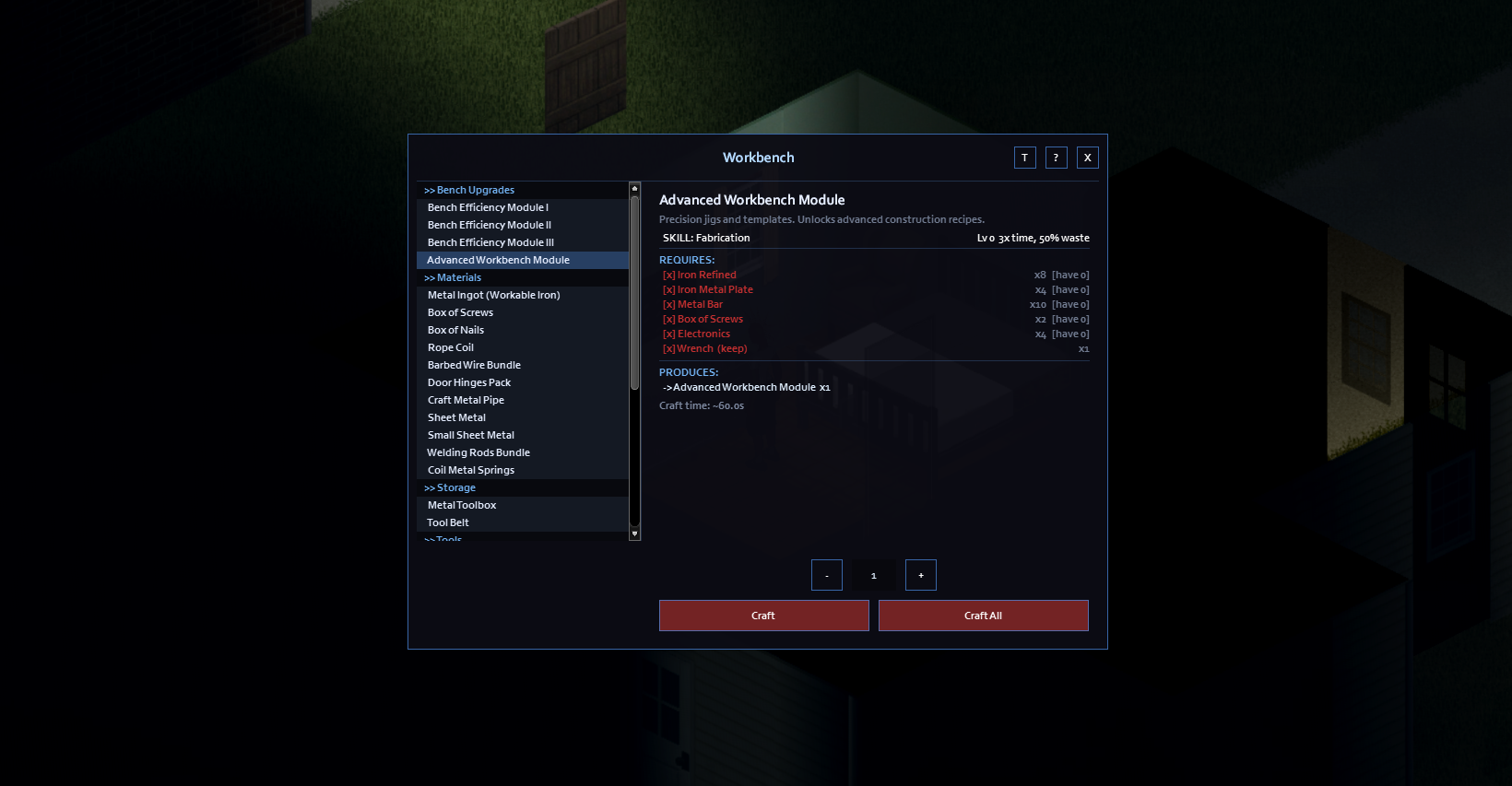

We have rolled out a major update to the Crafting Bench experience, focused on clarity, balance, and quality-of-life improvements across both UI and crafting logic. This patch improves how recipe dependencies are visualized, how complex trees are auto-balanced, and how players understand progression through skill and system guidance.
Craft Tree Layout
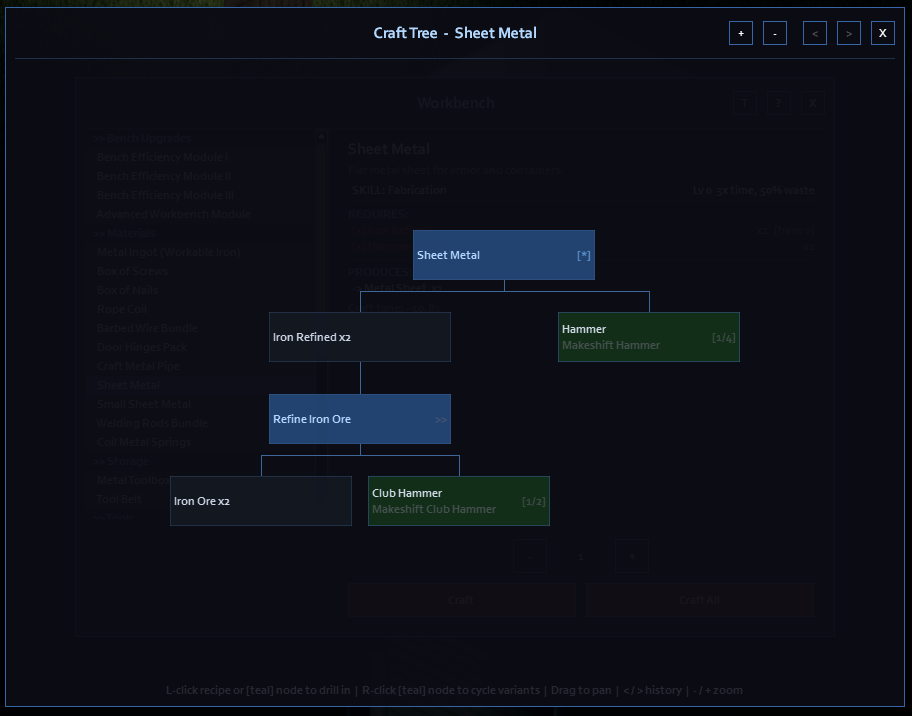
The Craft Tree uses a dynamic multi-pass layout system that:
- Cascades ingredient chains downward progressively instead of forcing flat top-level layouts
- Rebalances heavy left/right branches for a cleaner “Christmas tree” profile
- Detects and resolves card overlap and connector routing conflicts
- Repositions subtrees iteratively until the layout stabilizes
This means deep dependency chains are easier to follow at a glance, without awkward crossings and less visual clutter.
Connector Collision Handling
Line drawing has strict collision checks with card bodies and sibling subtrees. When a connector path would pass through a foreign branch, the layout solver repositions only the affected subtree and re-validates the tree until the conflict is resolved.
The result is cleaner, more readable pathing in dense recipes.
Skill and Progression
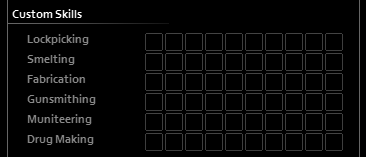
Crafting remains tied directly to your skill profile, and this update keeps that relationship front-and-center in the interface.
- Skill levels continue to influence craft time and waste chance
- Bench upgrades stack with skill improvements
- Requirements are easier to verify before committing materials
In-Game Guide
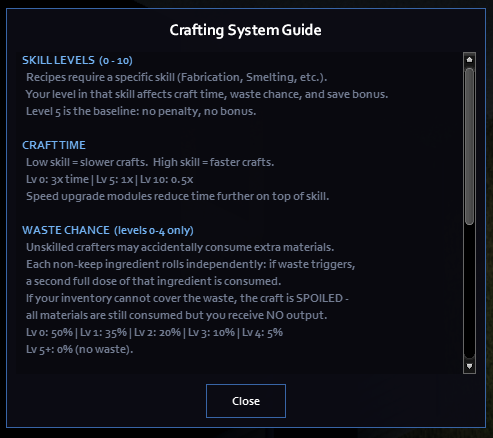
The Crafting System Guide makes core mechanics clear, including:
- Skill level breakpoints
- Craft time scaling
- Waste chance behavior
- Material loss and failure conditions
This helps new and returning players quickly understand how to optimize their workflow.
Why This Matters
Crafting trees can grow complex fast, especially on upgraded benches and advanced modules. This update focuses on making that complexity understandable without dumbing it down. The system is good at presenting dependencies in ways that feel intentional, readable, and balanced while still preserving the depth of your progression path.
What’s Next
We’ll continue tuning layout behavior and branch balancing in upcoming iterations, especially for edge-case recipes with unusually deep or asymmetric dependency chains. Your screenshots and feedback will be instrumental in this update, and we’re using that same feedback to improve and iterate
And as we progress I'll say this early: Thank you for any testing, breaking, and improving of this new system with us.